
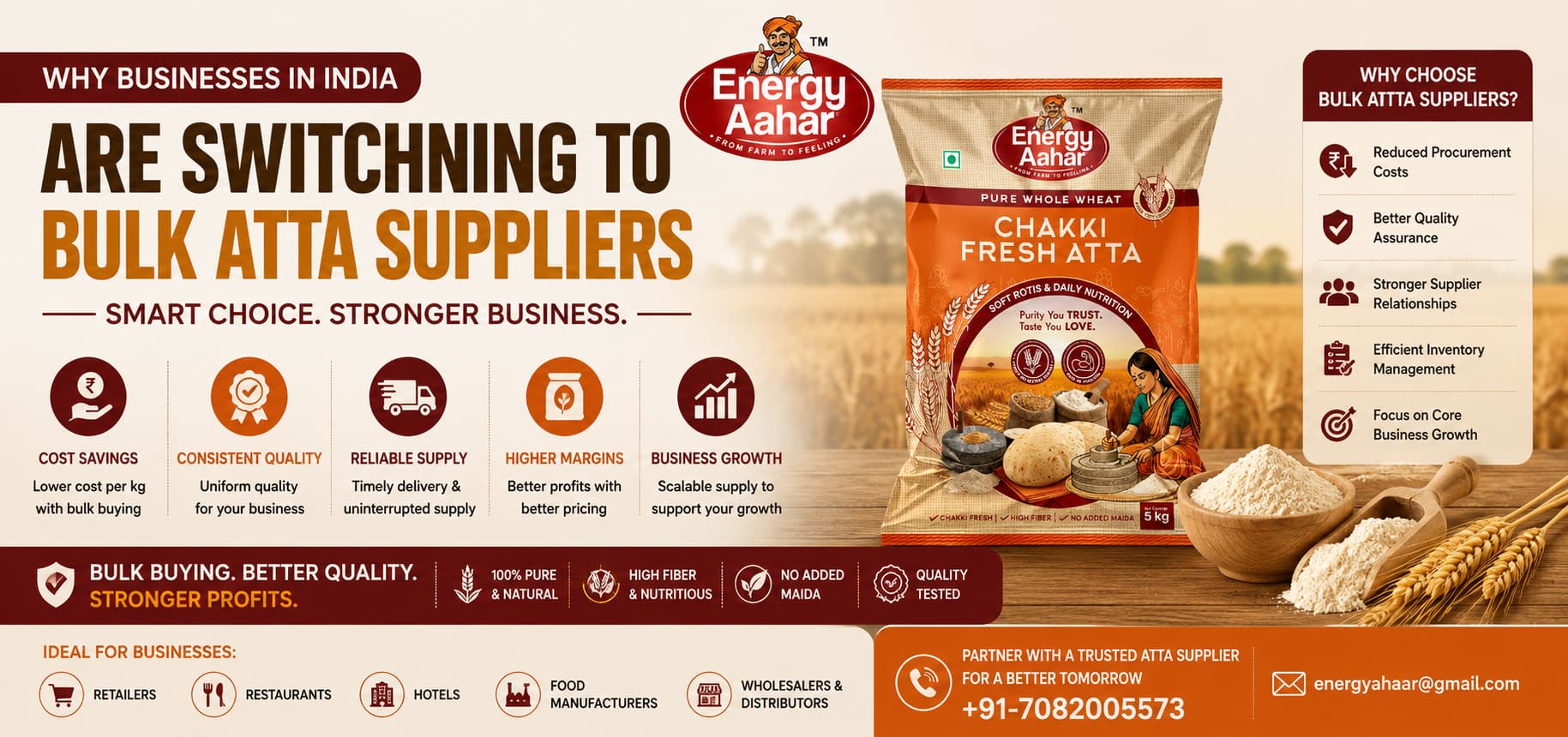
Why Businesses in India Are Switching to Bulk Atta Suppliers
If you run a restaurant, hotel, catering company, or food distribution business in India, your biggest hidden cost isn't rent or staff — it's inconsistent raw material pricing. Atta (wheat flour) is one of the highest-volume ingredients in Indian food service, and how you source it directly affects your margins.
This guide breaks down why bulk atta purchasing makes sense for B2B buyers, how to evaluate suppliers, and what to watch out for before you switch.
Why Bulk Atta Purchase Matters for B2B Buyers
Restaurants, hotels, and catering businesses run on predictable supply. A single missed delivery or price spike can throw off a week's menu planning. Buying atta in bulk from a dependable supplier solves three problems at once:
- Steady stock — no last-minute scrambling before a big order or event
- Lower per-unit cost — bulk pricing beats retail by a significant margin
- Fewer supply chain disruptions — one reliable relationship instead of juggling multiple vendors
Working directly with a wholesale food supplier also simplifies logistics, since deliveries can be scheduled around your actual consumption rate rather than reacting to shortages.
What Makes Bulk Atta Cheaper?
1. Lower price per kilogram Bulk orders cut out several layers of retail markup. The larger the order, the more room there is to negotiate — particularly with suppliers based in high-volume hubs like Delhi NCR, where distribution infrastructure keeps costs down.
2. Reduced logistics cost Fewer, larger deliveries mean lower transportation cost per unit compared to frequent small orders. This matters most for businesses ordering weekly or biweekly rather than daily.
3. Supplier-side discounts Wholesalers typically offer tiered pricing — the more consistently you order, the better your rate becomes over time. This rewards businesses that commit to a long-term supplier relationship rather than switching vendors for short-term savings.
How Bulk Buying Keeps Supply Consistent
For restaurants and hotels, an uninterrupted flour supply isn't a convenience — it's operationally non-negotiable. A single stockout can mean cutting menu items or paying a premium for emergency retail purchases.
Partnering with an established grocery supplier that serves institutional buyers helps maintain consistent inventory even when demand fluctuates seasonally (weddings, festivals, tourist season for hotels, etc.).
What Else Can You Source From a Bulk Wholesaler?
Most wholesale atta suppliers also stock adjacent staples, which lets you consolidate purchasing with a single vendor instead of managing five different supplier relationships:
- Pulses (dal varieties)
- Besan (gram flour)
- Suji (semolina)
- Rice
- Mustard oil
Consolidating orders like this also strengthens your negotiating position — suppliers are generally more flexible on pricing when you're buying across categories rather than atta alone.
How Bulk Purchasing Improves Inventory Management
Buying in bulk isn't just about lower prices — it's a planning tool. A steady bulk supply lets you:
- Build a buffer stock for high-demand periods
- Lock in stable pricing instead of reacting to market swings
- Avoid rushed, higher-cost emergency orders
This is especially valuable for distribution centers, cloud kitchens, and multi-outlet food chains that need predictable input costs to price their own menus accurately.
How Bulk Purchasing Helps Businesses Grow
Better margins. Lower per-unit cost on your highest-volume ingredient directly improves profitability, freeing up capital for other areas of the business.
Private-label opportunities. Many bulk suppliers offer custom packaging and branding, which makes it easier for growing food businesses to build their own packaged product line without setting up manufacturing themselves.
Room to scale. A dependable bulk supply chain means you can take on larger orders or open new locations without worrying whether your flour supply can keep up.
How to Choose the Right Bulk Atta Supplier
Not all wholesale suppliers are equal. Before committing, evaluate on these factors:
- Wheat quality — Ask where the wheat is sourced and whether the supplier can share quality certifications or sample batches.
- Pricing transparency — Compare quotes across at least three suppliers, and check whether pricing is fixed or tied to market fluctuation.
- Logistics reliability — A supplier with a strong local distribution network will deliver more consistently than one relying on third-party freight.
- Location advantage — Suppliers based near you (for example, within Delhi NCR) typically offer faster turnaround and lower delivery costs than distant vendors.
Can You Source Organic or Premium Atta in Bulk?
Yes. Demand for organic and premium wheat flour has grown steadily as more restaurants and hotels cater to health-conscious customers. Many wholesalers now offer organic pulses and premium-grade grain alongside standard bulk atta, so you can serve both value-focused and premium segments of your menu without sourcing from separate vendors.
Challenges to Watch Out For
Bulk buying isn't without trade-offs:
- Storage requirements. You'll need adequate dry storage to protect large volumes from moisture and pests.
- Higher upfront investment. Bulk orders tie up more capital than buying as-needed.
- Supplier dependency risk. An unreliable supplier can cause bigger disruptions than a retail shortfall would. This is exactly why supplier vetting matters more than price alone.
Frequently Asked Questions
What's the advantage of buying atta in bulk?
Lower cost per kilogram, more consistent supply, and better margins — particularly for high-volume food businesses like restaurants, hotels, and caterers.
Is bulk atta actually cheaper than retail?
Yes. Bulk pricing typically runs well below retail rates once you factor in reduced delivery frequency and supplier discounts.
What other products can I get from the same supplier?
Most bulk atta wholesalers also carry rice, pulses, besan, suji, and mustard oil — useful if you want to consolidate your grocery purchasing.
How do I choose a good bulk atta supplier?
Prioritize wheat quality, transparent pricing, delivery reliability, and proximity to your business location.
Where can I find a bulk atta supplier near Delhi NCR?
Look for wholesalers with an established distribution network in the region — proximity reduces both delivery time and transport cost.
The Bottom Line
For restaurants, hotels, and catering businesses in India, bulk atta purchasing isn't just a cost-saving tactic — it's a supply chain decision that affects margins, consistency, and your ability to scale. The right supplier relationship pays off far beyond the price per kilogram.